

Mahogany local SEO
Estimated read time: 10 minutes
BrightLocal research shows most consumers read reviews before choosing a local service provider.
Table of contents
Mahogany Local Source Checklist
Refine Primary Categories and Services
Mahogany Physio Clinic started showing up for the right local searches
How should I update my Google Business Profile for Mahogany searches?
What photos should a Calgary trades business add for local rankings?
Why do Mahogany businesses need neighborhood-specific posts?
Can a Calgary service company expect more calls from discovery searches?
How do I track whether ideas from BrightLocal are working?
Should I use broad or specific categories for a dental clinic near Seton?
What review pattern does Google like for Mahogany local SEO?
Why does a business near Mahogany Village Market rank differently than one in Auburn Bay?
What KPIs should I watch for map pack growth in Calgary?
Do I need local photo labels for Mahogany service pages?
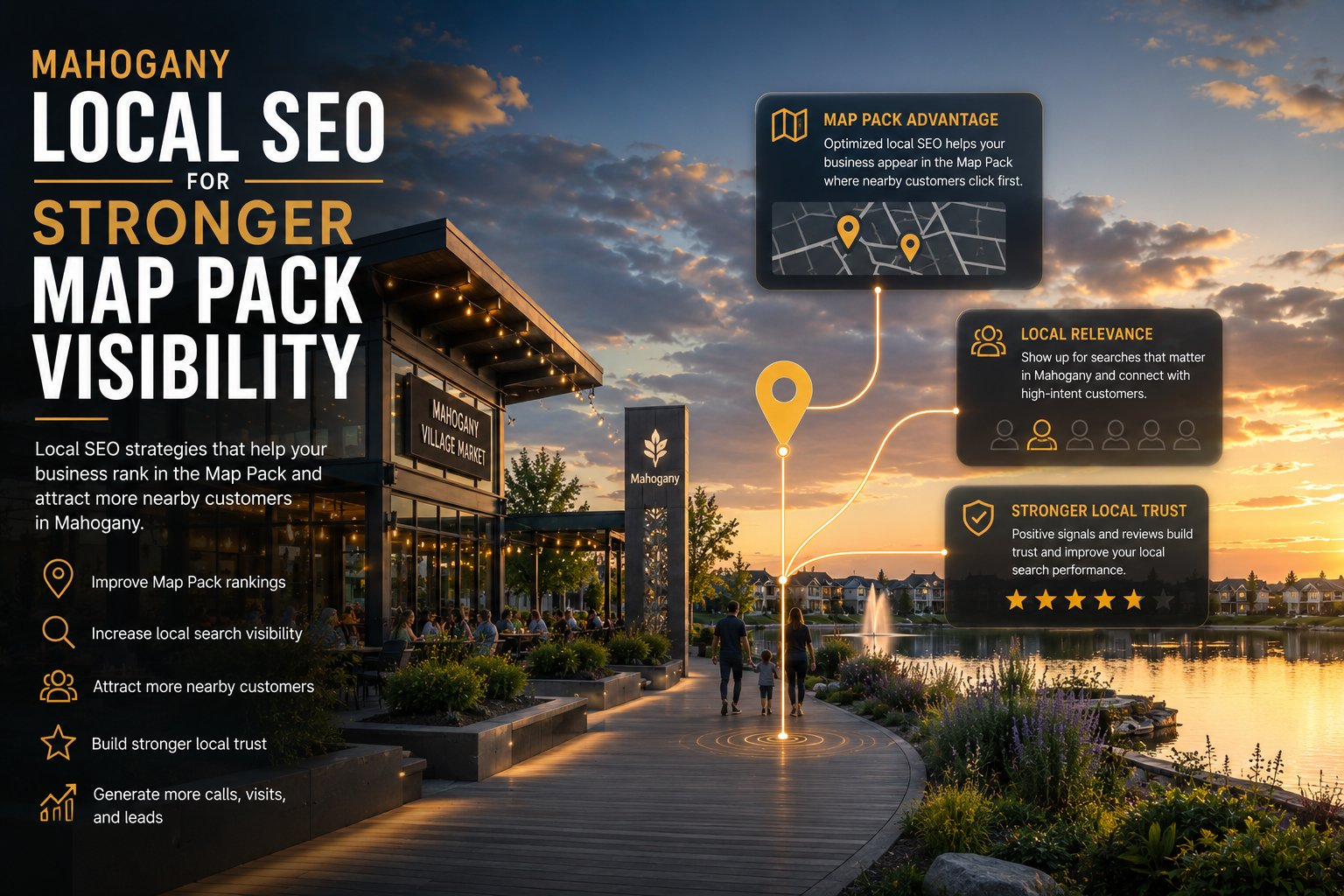
BrightLocal and GBP Insights point to the same thing: AI summaries and map results reward businesses that send clear local entity signals, not just broad citywide relevance. In Mahogany, that matters because people search around places they know, such as Mahogany Village Market, the lake, Westman Village, or the routes in and out of Auburn Bay and Seton. The job is to make your profile, service pages, photos, and reviews clearly local so Google can match your business to the exact intent behind those searches.
When those signals line up, you get more calls, more direction requests, and better-qualified leads from people already looking in Mahogany. It also improves your chances of appearing in AI Overviews when Google is deciding which local sources it trusts. In campaigns like this, Matheson Marketing usually starts by tightening the profile and on-site cues that support Mahogany local SEO, then checks whether those changes turn into real GBP actions.
Mahogany Local Source Checklist
For Mahogany local SEO, the fastest wins usually come from cleaner Google Business Profile categories, stronger neighborhood wording, recent photos, and reviews that mention real places nearby. If your listing already appears in the map pack but does not drive calls or direction requests, the issue is often relevance to Mahogany search intent rather than a lack of overall visibility.
| Metric | Target |
|---|---|
| GBP website clicks from discovery searches | 10%+ growth within 60–90 days |
| GBP direction requests | 15%+ month-over-month growth after profile updates |
| Review mentions of “Mahogany,” “Seton,” or “Auburn Bay” | 25%+ of new reviews include a neighborhood mention |
| Google Business Profile photo views | 8–15 new Mahogany-relevant photos published per month |
- Rewrite your Google Business Profile description and services so they include the Mahogany modifiers customers actually use, such as “near Mahogany Village Market” or “serving Mahogany and Seton.”
- Set your primary GBP category to the core service that drives the most value, then use secondary categories and service entries to match the narrower searches people make in Mahogany.
- Upload 8–15 original photos that show your storefront, team, vehicles, and nearby context tied to Mahogany landmarks or streets such as Mahogany Boulevard SE or 52 Street SE.
- Publish one GBP post every 7–10 days with a real job, seasonal offer, or neighborhood update, and keep the Mahogany reference natural.
- Ask recent customers for reviews when the experience is fresh, prompt them to mention the service and neighborhood, and reply with the same local terms without leaning on a template.
When map pack impressions rise but calls stay flat, the listing is usually showing for broader discovery terms without matching clear neighborhood intent. Before you assume rankings are the issue, it can be worth tightening category and service signals for Mahogany searches.
How AI Overviews choose local sources, Why Mahogany search intent differs, Which businesses benefit most
AI Overviews tend to pull from local sources that align tightly with the searcher’s place-based intent. For Mahogany local SEO, that usually means complete categories, specific service descriptions, neighborhood language in reviews, and on-site references that consistently point to Mahogany, Seton, Auburn Bay, or nearby landmarks that users actually mention when they search.
In Mahogany, AI Overviews matter because local searches here are rarely generic. People are not just looking for “Calgary dentist” or “restaurant near me.” They search around where they already are or where they are headed, such as Mahogany Village Market, the wetlands, or 52 Street SE on the way in from Auburn Bay. That changes which businesses Google cites. It tends to favor profiles and pages that clearly match neighborhood-level intent, not just citywide authority.
From what I have seen in BrightLocal’s local search ranking factors study and GBP Insights, AI summaries usually prefer businesses with consistent local entity signals: complete categories, service descriptions, review language, and on-site mentions that reinforce the same location pattern. Google is comparing the query, the business profile, and the supporting content across the web, then picking the source that best answers the local task. A practical move here is to rewrite your Google Business Profile services and business description to include real Mahogany modifiers customers use, such as “family dentist near Mahogany Village” or “physio serving Mahogany and Seton,” then upload 5–8 new photos labeled by service and location context. In my experience, that kind of consistency beats trying to outpublish competitors with generic posts.
- Best-fit sectors include dentists, physiotherapy clinics, childcare, home services, real estate, and restaurants with strong “near Mahogany” demand.
- Key KPI: GBP website clicks and direction requests from discovery searches.
- Realistic benchmark: a well-optimized listing often lifts non-branded local impressions by 10–25% within 60–90 days.
Refine Primary Categories and Services
The right primary category tells Google what your business should rank for first, while the Services section explains the narrower tasks you handle in Mahogany. In practice, Mahogany local SEO improves when your highest-value service is the primary category and your supporting services reflect the exact searches people make near Mahogany Village Market, Westman Village, Seton, and Auburn Bay.
In Mahogany, profile optimization matters because search intent is highly local and usually mobile. Someone standing near Mahogany Village Market, driving along 52 Street SE, or comparing options from Auburn Bay will often choose from the map results they can assess fastest. Your listing has to say exactly what you do, where you do it, and whether you feel current for the neighborhood.
The first fix is usually category alignment. I often see Mahogany businesses choose broad primary categories, then wonder why they show up for low-intent or irrelevant searches. Set the primary category to your highest-value core service, not your broadest description, then use secondary categories to cover adjacent offers.
After that, build out the Services section with specific entries that match how customers search in this part of southeast Calgary. A dental clinic should separate emergency exams, Invisalign, and family dentistry; a home service company should split furnace repair, AC tune-ups, and thermostat installation. Track GBP phone calls, direction requests, and website clicks by category change date so you can see what actually moved discovery. For businesses comparing options, it can help to benchmark against pricing that fits local SEO before deciding how much ongoing support you need for profile updates, content, and tracking.
- Add 8 to 15 original photos tied to Mahogany, not generic brand shots. Include your storefront, team on-site, nearby wayfinding, service vehicles in the neighborhood, and recognizable context like Westman Village or the wetlands pathways where appropriate.
- Publish one short post every 7 to 10 days featuring a real job, seasonal offer, or neighborhood update. Mention service context naturally, such as availability for homes near Mahogany Boulevard SE or overlap with Seton appointments.
- Ask for reviews at the point of satisfaction and guide customers with prompts like what service they booked, what part of Mahogany they are in, and how quickly you solved the issue. Reply to every review with service keywords and local context, without sounding templated.
Google reads category, service, photo, and review signals together to decide relevance and prominence. Listings with steady neighborhood-specific media and review replies often see map pack click-through rate improve within 30 to 60 days. Use Google Business Profile Performance and BrightLocal to monitor branded search impressions, review velocity, and photo views against nearby competitors in Auburn Bay and Seton.
Monitor map pack performance
To judge whether Mahogany local SEO is working, track weekly movement in map pack impressions, calls, website clicks, and direction requests against the exact profile changes you made. That view helps you separate broad visibility gains from true neighborhood demand coming from Mahogany, Westman Village, Seton, Auburn Bay, and nearby routes like 52 Street SE.
In Mahogany, local visibility shifts block by block. A business near Mahogany Village Market competes differently than one pulling demand from Seton or Auburn Bay, because search intent changes with where people are driving, shopping, and stopping on 52 Street SE or near Mahogany Lake. That is why tracking local signals matters here: your Google Business Profile is not just ranking or not ranking; it is picking up demand from specific nearby pockets, at specific times, with different actions attached.
I usually start with the Google Business Profile Performance report and log three KPIs weekly: map pack impressions, GBP calls, and direction requests. If impressions rise but calls stay flat, the listing is surfacing for broader discovery terms without converting. If direction requests spike on weekends, that often means your profile is matching in-person traffic patterns around Westman Village or shoppers already in the area.
- Export GBP data every Monday into a simple sheet with columns for impressions, website clicks, calls, direction requests, and top review mentions.
- Tag each week with any change you made, such as new photos, service updates, or revised categories.
- Use BrightLocal or Google’s UTM parameters on the website URL so you can separate profile-driven traffic in GA4 from other local search visits.
Watch review velocity as closely as rankings. A steady pace of 2 to 5 new reviews per month usually looks healthier than long gaps followed by a burst. Also track mention patterns: if customers keep naming “Mahogany,” “Seton,” or “close to South Health Campus,” Google Search Central’s guidance on search systems shows why Google gets stronger geographic relevance signals through review text. Businesses that monitor these signals monthly usually catch declines faster and improve map pack click-through rate within 60 to 90 days.
Mahogany Physio Clinic started showing up for the right local searches
This example shows what changes when a business stops optimizing for broad Calgary visibility and starts aligning with neighborhood intent. For Mahogany local SEO, the biggest gains often come from better entity signals, sharper service wording, and visual proof that the business is active in the exact pocket where searchers are making decisions.
Mahogany Physio Clinic in Westman Village was getting steady branded searches, but it was thin on discovery traffic from people searching “physio near Mahogany Village Market” or “same-day treatment in Mahogany and Seton.” The clinic was established, but its Google Business Profile relied on broad service language and generic photos, so it was not matching the way nearby patients actually searched when they were deciding quickly from a phone in the map pack. The problem was not overall visibility in Calgary. It was relevance at the neighborhood level.
We tightened the primary category to match the clinic’s highest-value service, rebuilt the services section around the terms patients use for acute injuries, pelvic health, and sports rehab, and rewrote the business description to include Mahogany-specific modifiers where they made sense. We also added fresh photos from the clinic entrance, the treatment rooms, and the surrounding Westman Village context, then started posting short updates tied to real appointments, seasonally relevant injuries, and nearby area coverage. On top of that, we asked for reviews at the point of discharge and coached patients to mention the service they booked and the part of southeast Calgary they were coming from, then replied using the same local language without sounding scripted. For teams looking to apply the same framework elsewhere in Calgary, the broader GEO approach for Calgary helps connect those profile edits to AI visibility and stronger map results.
The profile’s non-branded impressions moved into a steadier range, but the more useful change was what happened after that: GBP calls and direction requests started coming from people who were already looking in Mahogany, and the clinic’s map visibility improved enough that it began appearing more consistently for service-plus-location searches instead of only branded ones. That shift came from cleaner entity signals, not more content.
Key Takeaways
Mahogany local SEO works best when your profile, website, photos, reviews, and tracking all reinforce the same neighborhood signal. If Google can clearly connect your business to Mahogany-specific searches, you are more likely to earn map visibility, AI Overview mentions, and actions from people already close to booking.
- Mahogany searches are hyper-local, so sources that mention Mahogany Village Market, the wetlands, 52 Street SE, or Westman Village are more likely to be cited than generic Calgary pages.
- Set your Google Business Profile primary category to the highest-value core service, then use secondary categories and Services entries to match how people search in southeast Calgary.
- Track map pack impressions, GBP calls, and direction requests weekly in Google Business Profile Performance or BrightLocal, tagging each change so you can tie lifts to specific updates.
- Add 8 to 15 original photos with neighborhood context, then publish one short post every 7 to 10 days featuring a real job, seasonal offer, or Mahogany-area update.
- Ask for reviews at the point of satisfaction and reply with service keywords plus local references like Mahogany, Seton, or South Health Campus to strengthen geographic relevance signals.
Research Notes
The research behind Mahogany local SEO is consistent: local ranking systems respond better when relevance, proximity cues, and business detail all point to the same neighborhood. In a place like Mahogany, that means using specific service language and place references instead of relying on broad Calgary optimization alone.
- Google Search Central says local queries often include implicit intent, so “near Mahogany” phrasing helps align content with the place users are already targeting.
- Moz’s local search ranking factors research shows reviews, categories, and proximity cues influence map-pack visibility; GBP updates work best when those signals stay consistent across profile fields.
- Google’s local ranking guidance emphasizes prominence and relevance together, so neighborhood mentions in reviews can reinforce proximity when competitors sit in nearby pockets like Auburn Bay or Seton.
FAQ
These answers cover the most common practical questions businesses ask when improving Mahogany local SEO. Each one focuses on actions that help a listing match neighborhood search intent, generate stronger map pack engagement, and support clearer local signals for Google.
How should I update my Google Business Profile for Mahogany searches?
Set your primary category to the core service, add Mahogany-specific service descriptions like “family dentist near Mahogany Village,” and upload 5–8 labeled photos.
What photos should a Calgary trades business add for local rankings?
Add 8 to 15 original photos showing your storefront, team on-site, service vehicles, and recognizable Mahogany or Westman Village context instead of generic brand images.
Why do Mahogany businesses need neighborhood-specific posts?
Google combines category, service, photo, and review signals, and a short post every 7 to 10 days with Mahogany context reinforces local relevance.
Can a Calgary service company expect more calls from discovery searches?
A well-optimized listing often lifts non-branded local impressions by 10–25% within 60–90 days, which usually improves GBP clicks and direction requests.
How do I track whether ideas from BrightLocal are working?
Export GBP data weekly and monitor impressions, website clicks, calls, direction requests, and review mentions alongside each category or photo change date.
Should I use broad or specific categories for a dental clinic near Seton?
Use the highest-value core service as the primary category and split services like emergency exams, Invisalign, and family dentistry into separate entries.
What review pattern does Google like for Mahogany local SEO?
A steady pace of 2 to 5 new reviews per month looks healthier than long gaps, especially when reviews mention Mahogany, Seton, or South Health Campus.
Why does a business near Mahogany Village Market rank differently than one in Auburn Bay?
Search intent shifts by pocket, so a location near Mahogany Village Market competes on different map queries than one pulling demand from Auburn Bay or 52 Street SE.
What KPIs should I watch for map pack growth in Calgary?
Track map pack impressions, GBP calls, and direction requests weekly, then compare them with branded and discovery traffic in GA4 using UTM parameters.
Do I need local photo labels for Mahogany service pages?
Yes, label new photos by service and location context because Google uses those signals with reviews and descriptions to judge neighborhood relevance.
Businesses in Mahogany are already using these signals to win more AI Overview placement, map pack visibility, and direction requests, and it often starts when they build a Mahogany local visibility strategy around map pack and AI search signals instead of treating the citywide listing as enough.
Author: Jack Matheson
Founder, Matheson Marketing
Jack Matheson is the founder of Matheson Marketing, a Calgary-based GEO and local SEO agency he launched in 2023. He studied marketing at SAIT and works with local Calgary businesses on the entity signals, structured content, and GBP profiles that drive map visibility and qualified leads. His focus is practical: schema markup, hyperlocal service-area pages, and AI-ready content structures that help businesses get found when nearby customers are ready to book.
Edited by: Matheson Marketing Editorial Team